Methods of Research
Primary Research:
Primary research is new information collected which does not exist anywhere else. This type of research is aimed to answer specific questions and is collected using many methods such as; questionnaires which is one of the easiest ways to collect data, however it is hard to gather specific information from this method. Primary research can also be gathered by interviews, observations, and experiments.
To collect primary research for my 3 Minute Wonder, I created an online survey designed to guide me towards a target audience which is most likely to be interested in this documentary. I collected 13 responses which makes it considerably unreliable, however I did manage to collect useful information. The information I gathered suggested that 60% of the responses enjoyed watching human stories over any other type of documentary genre, which is the documentary genre which I used to create my documentary.


The primary research used in Harry Potter is in result to J.K. Rowling using multiple channels to reach her audience. She also recognized that the audience for Harry Potter ranged from young children to adults, and as a result to the books and movies, Rowling then created an experience through amusements parks such as the Wizarding World of Harry Potter. She also used the response of her books to reach her audience when the films were created. The review from TalkTalk: "There can be few people in the country who know nothing of the Harry Potter phenomenon. The legions of fans have all spoken with the same voice, calling for the film to remain faithful to the book. Fear not. Aside from some minor changes to keep the film beneath the whopping two and a half hours that it became, J.K. Rowling's wonderful story remains intact." (Harry Potter and the Philosophers Stone Review, 2014). This review suggests that the primary research conducted before producing this phenomenon pays off in result to producing what the fans want to see, and presenting this to all target audiences.

Secondary research is existing data/information which is provided publicly for other researchers to use. This type of research is available through resources such as the worldwide web, which is the most easiest way of collecting existing information if you have access to the internet. This research can also be gathered through books, journals, newspapers etc..
To collect secondary research for my 3 Minute Wonder, I gathered all information on cystic fibrosis through the worldwide web. I gathered UK statistics, the cystic fibrosis gene, life expectancy etc.. Even though this way of collecting research is quick and easy, much of the information varied on different websites, therefore I used what looked like the most reliable websites such as the NHS.


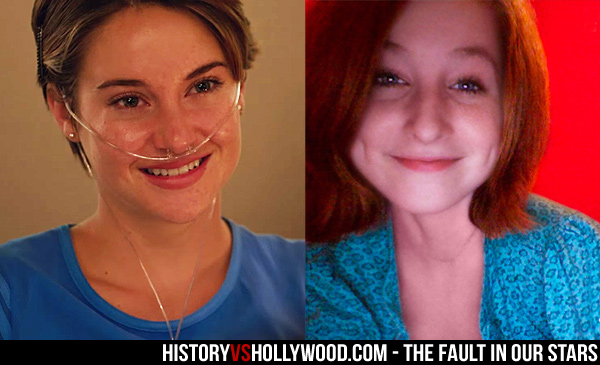
An example of a newly released film in the professional industry is The Fault In Our Stars. The primary research conducted for this film was based upon and inspired by Esther Earl who died in 2010. Therefore, for director Josh Boone to grasp the real aesthetics of the characters and setting, much research had to be conducted. For example, research was produced on inspiration Esther Earl before auditions were held for main character Hazel Grace. It also appears that Esther Earl and Shailene Woodley, who plays Hazel Grace, look very similar. A review of this film from Boston Standard is: "Usually being squeezed between two sets of late teens/twentysomethings on the back row doesn't sound bad, but experiencing blubbering before a potentially heart-breaking scene took place was quite a bizarre experience - as the cinema-goers knew what was on the horizon, obviously being avid fans of the book." (Cinema Review, 2014). This suggests that the secondary research that took place have given the viewers something which is a replica of the best selling novel, being aware of each scene and what is coming next.
Quantitative Research:
Quantitative research is a method which "provides a measure of what people think from a statistical and numerical point of view." (BL, 2014). The quantitative research which I gathered as research for my 3 Minute Wonder was statistics on cystic fibrosis which I used as secondary research.
In the film Forrest Gump, many historic moment are featured including war-based scenes and the change of presidents in the USA, therefore numerical statistics would need to be gathered. This could be the dates of these occurrences, such as the Vietnam war, which started in 1955 and ended in 1975, also the dates when president Kennedy, Johnson, Nixon were all president. This is another excellent example of secondary research. As well as this, this drama and romance based classic stands at a rating of 8.8/10 on IMDb, which is an example of quantitative research. This is an extremely high rating compared to other films which stars Tom Hanks such as Saving Private Ryan which stands at an 8.6/10 rating, or even The Green Mile which has a lower rating of 8.5/10. This provides evidence that this quantitative research of this film which features many historic moments throughout this film has paid off.

In the film Forrest Gump, many historic moment are featured including war-based scenes and the change of presidents in the USA, therefore numerical statistics would need to be gathered. This could be the dates of these occurrences, such as the Vietnam war, which started in 1955 and ended in 1975, also the dates when president Kennedy, Johnson, Nixon were all president. This is another excellent example of secondary research. As well as this, this drama and romance based classic stands at a rating of 8.8/10 on IMDb, which is an example of quantitative research. This is an extremely high rating compared to other films which stars Tom Hanks such as Saving Private Ryan which stands at an 8.6/10 rating, or even The Green Mile which has a lower rating of 8.5/10. This provides evidence that this quantitative research of this film which features many historic moments throughout this film has paid off.

Qualitative Research:
Qualitative research is very different to quantitative research as it does not consists of research through numbers, but is aimed to gather information on peoples opinions instead. The qualitative research which I gathered as research for my 3 Minute Wonder was again by the use of my survey as primary research, which presents peoples opinions on documentary's and cystic fibrosis in general.
An example of quantitative research in the professional industry is seen in the final part of the Lord of the Rings trilogy. This is where the audience were able to express their own thoughts on the role of fantasy, and the understanding they have of the location of the authors world etc.. This was done to gather the opinions of individuals and not from a numerical point of view. The rating of this The Lord of the Rings: The Return of the King is a 8.9/10 on IMDb, which is considerably higher than every single one of the previous films. This may have been due to the input which the fans had on this movie.

An example of quantitative research in the professional industry is seen in the final part of the Lord of the Rings trilogy. This is where the audience were able to express their own thoughts on the role of fantasy, and the understanding they have of the location of the authors world etc.. This was done to gather the opinions of individuals and not from a numerical point of view. The rating of this The Lord of the Rings: The Return of the King is a 8.9/10 on IMDb, which is considerably higher than every single one of the previous films. This may have been due to the input which the fans had on this movie.

Data Gathering Agencies:
Some examples of data gathering agencies are information based websites such as; BARB and RAJAR. BARB presents the public with numeral statistics on television programmes and channels. BARB is very similar to IMDb in the sense that they provide TV listings. However IMDb provides the public with greater detail on specific movies and TV programmes. It also provides information on movies which are going to be shown in the future. RAJAR presents the audience with numeral statistics like BARB. However, RAJAR focuses on radio stations instead of television programmes.
Purposes of Research
Audience and Market Research:
Audience and market research is audience data, which involves the statistics on how many people watch a television programme and whether or not this research includes the intended audience. Audience and market research includes audience profile where information is gathered on the audience using demographics. This allows a researcher to focus on putting across a message guided towards the audience the researcher intended. Some other examples of audience and market research are; the consumers behaviour and attitudes, audience awareness and competition. The audience and market research which I gathered was based upon my survey where I asked questions on the audiences age, gender and interests to gather a general idea of the type of people which would watch a documentary on cystic fibrosis.
Production Research:
Production research can consist of the content of the product, which is "information and experiences that provides value for an audience" (Content, 2014). It can also be; viability, finance, costs and personnel etc.. For my 3 Minute wonder I used content by arranging an interview with a physio specialist to provide reliable information to the audience. The presence of a specialist should make the audience much more secure with the information which is provided.
Assessing Research Data
Reliability:
Reliability is being able to replicate a questionnaire/survey etc.. and being able to roughly receive the same results. To gather research I used an online survey. The reliability of my research is not reliable in the sense that I used a large sample size. However much of the responses which I did receive were aimed towards one of the questions rather than the public choosing completely different answers. Therefore it suggests what a majority of the public thinks towards documentaries, for example:


However, receiving a larger amount of responses could direct my research towards a more accurate idea of the public's feeling towards documentaries on cystic fibrosis and what kind of audience would enjoy this topic. I also believe that the people which filled out this survey took it considerably serious as many people completed the survey which I knew directly.
Validity:
Validity is measuring what you set out to measure in the first place, which again can be done using questionnaires/surveys. My aim for using a survey was to end up with responses which enjoyed documentaries with a human story genre, also who would be interested in the topic of cystic fibrosis. This shows validity as this is what I aimed to measure, however I did expect a variation between age ranges as much of the people which completed my survey were 18 or under. There is no certainty in whether the respondents responded with what they truly believed, however they did not know what I was set out to measure. Therefore there was no way of the respondents responding to questions purely by what they thought I wanted them to say. Some questions may vary on levels of validity such as:
This is because it is clear to the public how I wanted them to respond.
Representativeness and Generalisability:
The participants which completed my survey are not representative due to only having 13 responses. However much of the respondents were at the age of 18 or younger and was generally interested in watching a documentary on cystic fibrosis.
BL, (2014) [online] available at: http://www.bl.uk/bipc/resmark/qualquantresearch/qualquantresearch.html [date accessed: 29/04/2014]
Content, (2014) [online] available at: http://en.wikipedia.org/wiki/Content_(media) [date accessed: 01/05/14]
Harry Potter and the Philosophers Stone Review, (2014) [online] available at: http://www.talktalk.co.uk/entertainment/film/review/films/harry-potter-and-the-philosopher-s-stone/1591 [date accessed: 30/06/2014]
Cinema Review, (2014) [online] available at: http://www.bostonstandard.co.uk/what-s-on/arts-leisure/cinema-review-the-fault-in-our-stars-12-1-6149312 [date accessed: 30/06/2014]

Alycia,
ReplyDeleteThis is a solid first draft; you have covered all of the necessary terms and have provided examples from your own work to back up your definitions. I have awarded a merit for this post. To achieve a distinction you need to add some specific and detailed examples from the professional industry, for example, find out what primary and secondary research has been conducted for a specific film.
Great start,
EllieB